

Why Did My Cake Sink? Troubleshooting the Common Causes of Collapse
The Crushing Disappointment
There is no greater baking disappointment than watching a perfectly risen cake collapse into a concave crater as it cools.
This failure isn't arbitrary; it's physics. Cake collapse is almost always due to an imbalance between the structural integrity (provided by flour, eggs, and setting proteins) and the rising power (provided by leavening and aeration). The center falls because the walls aren't strong enough to support the air bubbles within. This troubleshooting guide will help you diagnose the common causes and achieve a consistently flat, beautiful layer.
The Primary Culprit: Under-Baking
This is the most frequent and understandable cause of a sunken center. It happens when you confuse surface browning with internal readiness.
The Reason: The cake looks done on the outside because the sugar and proteins on the surface have caramelized and set. However, the internal structure (egg proteins and flour starches) hasn't had enough time to coagulate and solidify. The air bubbles are still supported by liquid batter.
The Result: When the cake leaves the heat of the oven, the air inside the unbaked portion cools and contracts. Since the walls of the air bubbles have not solidified, the structure collapses inward, creating the classic sunken center. The core will often look wet and dense.
The Fix: Always bake until the toothpick test is completely clean. For guaranteed success, you can use an instant-read thermometer: the center of the cake should register around 200 degrees Fahrenheit (~93C) when fully set. Also, ensure the cake is visibly pulling away from the edges of the pan—a sure sign that the side structure is done.

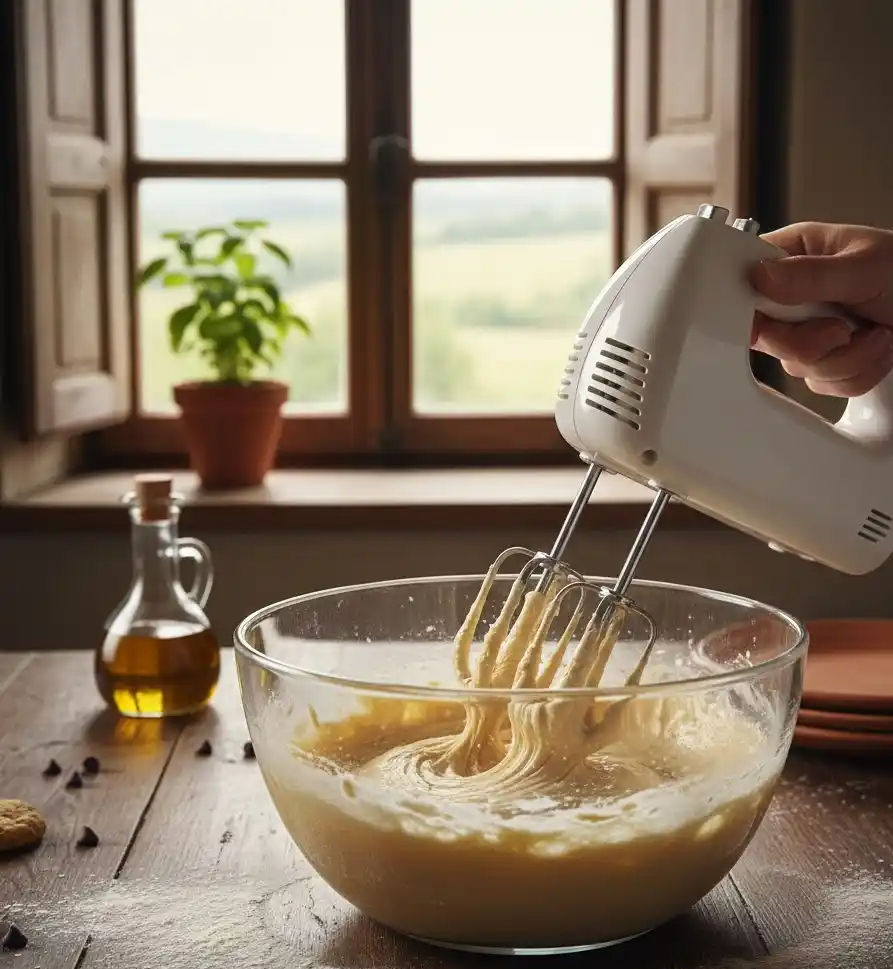
The Mixing and Leavening Imbalance
A cake's ultimate height and stability are determined before it ever hits the oven. Errors in leavening or mixing destabilize the rise itself:
Too Much Leavening: If you add too much baking powder or baking soda, the cake rises too fast and too high—it's essentially an explosion. The delicate structure is stretched past its limit, and the center (the last part to cook) simply tears and collapses under its own weight because the bubbles were too large to sustain the structure.
Over-Mixing the Batter: Excessive mixing activates too much gluten. This creates a dense, tough ring around the edge that sets quickly. The center, which is softer and more tender, cannot keep pace with the stiff sides and sinks dramatically. Remember the rule from the Muffin Method: mix only until the dry streaks disappear.
Under-Mixing (Poor Aeration): If you shortcut the creaming process (creaming butter and sugar) or fail to incorporate the eggs properly, the initial air pockets are too few or too weak. The cake lacks the necessary lift to handle the expansion from chemical leaveners and the entire structure fails during baking, leading to a flat, dense result.
Temperature Extremes
Oven temperature and consistency are the architects of your cake's final shape. Inconsistencies are structural killers:
Oven Temperature Too Cool: If the oven is too cool, the slow, gentle heat doesn't set the structure fast enough. This allows the chemical leaveners to expand for too long, creating an unstable internal cavity that easily collapses. Always preheat your oven completely, and consider using an oven thermometer to verify its actual temperature.
Temperature Shock: This is the key reason we tell you not to peek! Opening the oven door too early (before the cake is in its final third of baking) or moving the pan too suddenly causes a rapid temperature drop and air movement. This sudden chill contracts the air and liquids inside the cake before the proteins have solidified, leading to immediate, visible collapse.


The Ingredient Imbalance (The Structural Weight)
Too much of an ingredient that tenderizes or holds moisture can overwhelm the cake's ability to lift and set:
Too Much Sugar: Sugar is a tenderizer that raises the temperature required for the proteins to set. Too much sugar means the cake needs to be in the oven longer to set, making it highly susceptible to collapse.
Too Much Fat or Liquid: Excess moisture, fat, or liquid simply weighs down the batter, making it difficult for the leavening to lift the structure. If your recipe calls for adding fruit (like berries), dusting them lightly with flour helps suspend them and prevents them from sinking, which can pull the entire cake down.
High Altitude: For those baking above 3,000 feet, the cause is the physics itself. If the leavening isn't reduced, the gases expand too quickly due to low pressure, leading to an inevitable collapse because the structure can't keep up.
Confidence in the Cooling—and Beyond
The sting of a sunken cake is real, but it is a baking challenge that is easily overcome with knowledge. Cake collapse is not random bad luck; it’s a direct message from the chemistry of your batter about an unstable structure.
By embracing the solutions outlined here—from carefully measuring your leaveners and ensuring a stable oven temperature to, most critically, trusting the internal doneness—you take comprehensive control of your baking environment. Remember that the final moments of baking are the most crucial for setting the structure. Once you bake your cake completely through, the proteins are set, the bubbles are solidified, and the structure is permanent.
Resist the urge to peek! Trust the process, and you will be rewarded with a beautiful, level layer. Now go forth and bake with unwavering confidence—the days of the sunken center are officially behind you!