

Nut Flours Demystified: Substituting Almond, Coconut, and Oat Flours
The Gluten-Free Challenge
The rising popularity of alternative flours has brought a world of new textures and flavors to baking. However, the move away from traditional wheat flour presents a major structural challenge: non-wheat flours lack the crucial, elastic protein known as gluten.
Successful substitution requires understanding the unique functional profile of each nut or grain flour—specifically its fat, fiber, and absorbency levels—as they behave vastly differently from all-purpose flour. This article will demystify the three most common non-wheat flours and provide the essential rules for adjusting liquids and binders when substituting.
Understanding Key Alternative Flours
Each of these flours requires a different approach due to its unique composition:
Almond Flour (Fat and Tenderness)
Composition: Ground from blanched almonds, almond flour is relatively high in fat and low in carbohydrates.
Functional Role: The high fat content naturally acts as a tenderizer, inhibiting gluten development (if used with wheat flour) and providing a rich, moist crumb. Since it brings its own fat, recipes often require less added butter or oil compared to wheat flour recipes.
Texture: Creates a dense, rich texture perfect for French macarons, cakes, and cookies.
Bonus Note: Totally Keto Friendly!


Fiber and Absorbency
Coconut Flour
Composition: Made from dried, defatted coconut meat, this flour is exceptionally high in fiber and protein.
Functional Role: Coconut flour is an extreme absorber—it soaks up liquid like a sponge. This characteristic means it requires significantly increased liquid and egg content in any recipe to prevent a final product that is dry, dense, and crumbly.
Substitution Note: You can rarely substitute coconut flour 1:1 by weight or volume for any other flour.
Structure and Density
Oat Flour
Composition: Made from finely ground oats, this is a whole-grain flour (high fiber) that contains proteins similar to gluten but lacks the specific proteins needed for elasticity.
Functional Role: It adds a pleasant, nutty flavor and contributes a soft texture due to its high oil and fiber content. It tends to create a denser, less airy structure than traditional wheat flour.
Best Use: Excellent for use in muffins, quick breads, and pancakes where a denser, whole-grain texture is desired.

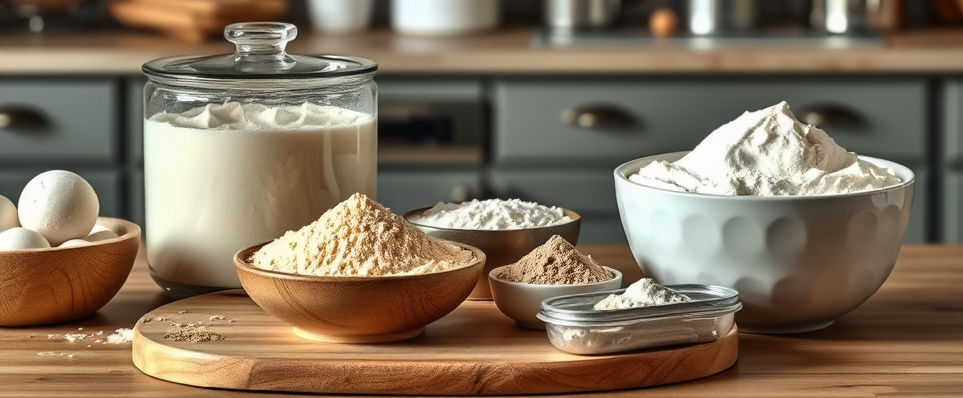
Practical Substitution Rules
Almond Flour
Key Feature: High Fat Content
General Substitution Rule: Substituted 1:1 weight for wheat flour
Critical Adjustments: Reduce the added fat and oil in the recipe slightly
Coconut Flour
Key Feature: High Fiber/Absorbency
General Substitution Rule: Substitute at a ratio of 1/4 to 1/3 cup for every cup of wheat flour.
Critical Adjustments: You must add more liquid and eggs to compensate for the extreme dryness.
Oat Flour
Key Feature: Whole Grain/Density
General Substitution Rule: Substituted 1:1 weight for wheat flour
Critical Adjustments: Expect a denser texture. It will usually need a binder to prevent crumbling.
Note: I have a whole article on gluten free baking that will help you select binders and materials to ensure a great bake. Check out Gluten-Free Baking Challenges!
Substitute with Confidence!
Baking with nut flours is a science of compensation. Their lack of gluten must be balanced with binders, and their unique fat and fiber profiles demand careful, intentional adjustments to liquid and oil. However, you are now armed with the information required to make these adjustments successfully!
Don't fear the substitution. Master the specific absorption rate of coconut flour and the fat content of almond flour, and you will unlock a world of naturally tender, complex-flavored, gluten-free baking.